If you've owned your home for a few decades — or you're buying a home built between the 1950s and 1970s — there's something hiding in your garage or utility closet that your insurance company may have already flagged: your electrical panel.
More specifically, if your home has a Zinsco panel (sometimes labeled Sylvania, GTE-Sylvania, or Magnetrip), you could be looking at a non-renewal notice, a policy cancellation, or a demand to replace it before your coverage continues.
As a Realtor serving Placer and Sacramento Counties, I'm seeing this come up more and more — in escrow, at listing appointments, and in conversations with homeowners who had no idea this was even an issue. So let's break it down in plain terms.
What Is a Zinsco Panel — and Do You Have One?
Zinsco panels were manufactured from roughly the 1950s through the 1970s and were considered perfectly standard when they were installed. In 1973, the Zinsco brand was sold to GTE-Sylvania, which continued producing the same flawed design under a new name.
The panels are still widely found in homes across Northern California — including right here in Placer and Sacramento Counties — because once something is installed and "working," most homeowners don't think twice about it.
- Look for the words Zinsco, Sylvania, GTE-Sylvania, or Magnetrip printed on the breaker panel or internal sticker
- Circuit breaker handles in bright colors — red, blue, or green — are a telltale sign
- Breakers are arranged in a vertical row layout
- The panel may look totally normal and show no visible damage — that's what makes this tricky
Not sure? A licensed electrician or certified home inspector can identify it in minutes. If you're buying or selling a home, this is exactly the kind of thing that comes up in a 4-point inspection or standard home inspection report.
Why Insurance Companies Are Done With These Panels
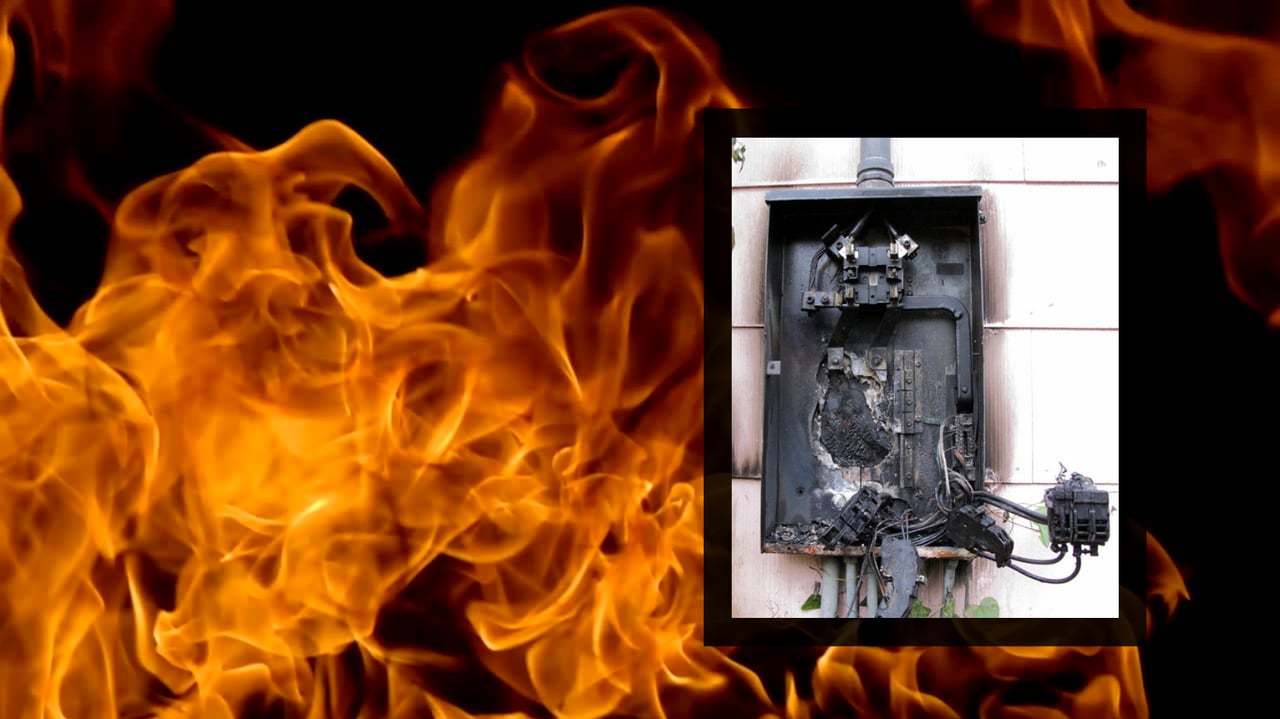
Here's the thing about Zinsco panels — they look like they're working fine, right up until they're not. The design flaws are internal, which makes them especially dangerous.
These are the documented problems that have put Zinsco panels on insurers' "do not cover" lists:
- Breakers that don't trip when they should. A breaker's whole job is to cut power when a circuit is overloaded. Zinsco breakers are known to fail at this — allowing dangerous amounts of electricity to keep flowing, which leads to overheating and fire.
- Breakers that fuse (literally melt) to the bus bar. When this happens, the breaker can't function at all — even if it looks like it's in the "off" position, the panel may still be fully powered.
- Corroding aluminum components. The aluminum wiring and bus bars used in Zinsco panels oxidize over time, creating poor electrical connections and generating heat.
- Arcing behind the panel. This can start a fire in hidden areas of your walls — completely invisible until significant damage has already occurred.
⚠️ Important: Zinsco panels do not meet modern National Electrical Code (NEC) standards and would not pass today's Underwriters Laboratories (UL) safety certification — even though there was never a formal recall issued on them.
Insurance companies are in the business of calculating risk. They know statistically that homes with Zinsco panels file fire-related claims at a significantly higher rate than homes with modern panels. So their response is straightforward: replace it, or we won't cover you.
What's Actually Happening to Homeowners Right Now
This isn't just theoretical. Across California, homeowners are receiving letters from their insurance carriers with two options: replace your electrical panel by a certain date, or your policy will be cancelled or non-renewed.
In Southern California, electrical contractors have been completing replacement projects involving dozens of Zinsco panels at residential complexes after HOAs received non-renewal letters from insurers. This is happening at scale — and it's making its way up here to Northern California too.
For our local market in Placer and Sacramento Counties, the implications are real:
- The California FAIR Plan — the insurer of last resort — has rejected policies for homes with Zinsco panels unless upgrades are completed first
- Even in markets where insurance is harder to come by (thanks to the overall California insurance climate), carriers are not making exceptions for Zinsco panels
- Homeowners who delay may find themselves scrambling to get a replacement done quickly under pressure — and paying more for it
Northern California note: In El Dorado, Sacramento, and Placer Counties specifically, the overheating risk from Zinsco panels is compounded by our hot summers, which already put extra strain on home electrical systems. Add an EV charger or solar installation into the mix, and an aging panel simply can't keep up.
What This Means If You're Buying or Selling a Home
This is where it gets very real, very fast — and where I see it come up most often in my work as a Realtor.
If You're Selling
A Zinsco panel discovered during a home inspection is a red flag that can derail or delay your escrow. Buyers may request you replace it as a condition of the sale. Even if they don't, their lender may require it — because without homeowners insurance, there's no loan.
If You're Buying
If a home you're under contract on has a Zinsco panel, you need to know before you close. Not just because of the safety risk, but because you may not be able to secure homeowners insurance without replacing it first — and without insurance, your lender won't fund the loan.
If You Already Own Your Home
Check your panel now — before your insurance company does it for you at renewal time. Getting ahead of this gives you time to shop contractors, get multiple quotes, and avoid the rush. Homeowners who wait until they receive a cancellation notice are often stuck paying a premium for last-minute work.
What to Do If You Have a Zinsco Panel
- Identify your panel. Go look at your electrical panel right now. Check for Zinsco, Sylvania, GTE-Sylvania, or Magnetrip labels and look for those colorful breaker handles.
- Call a licensed electrician for an assessment. A qualified electrician can evaluate the current condition of your panel and give you a replacement quote. Get at least two quotes.
- Contact your insurance carrier. Ask directly whether your current policy has any requirements or flags related to your electrical panel. Don't wait for a letter.
- Budget for replacement. See cost estimates below. If you're planning a solar installation or EV charger addition, this is a smart time to bundle the work — you may qualify for tax credits that help offset costs.
- If you're in a transaction, disclose and address it early. Don't let this be the surprise that blows up your escrow. The sooner it's on the table, the more options everyone has.
What Does It Cost to Replace a Zinsco Panel?
Costs vary depending on your panel's amperage, local labor rates, permit requirements, and whether additional wiring work is needed. Here's a general range for Northern California:
| Scope of Work | Estimated Cost |
|---|---|
| Standard panel replacement (100–200 amp) | $3,000 – $5,000 |
| Panel upgrade with additional capacity | $5,000 – $8,000 |
| Panel + partial rewiring | $8,000 – $10,000+ |
| Permit (Placer/Sacramento County, varies) | $200 – $600 |
A standard panel replacement typically takes about one day. Always use a licensed electrical contractor and pull the proper permits — unpermitted work creates problems when you sell, and could void your insurance coverage entirely.
Zinsco Isn't the Only One — Other Panels to Know About
While Zinsco panels are getting a lot of attention right now, they're not the only brand that insurance companies are flagging. If you have any of the following, it's worth asking your insurer and an electrician about your options:
- Federal Pacific Electric (FPE) / Stab-Lok — Arguably even more notorious than Zinsco. Failure rates in testing have been reported as high as 25–65%. Widely flagged or denied by insurers.
- Challenger Electrical Equipment Corp. — Subject to some recalls; increasing restrictions from insurers.
- Pushmatic / Bulldog — Obsolete design with failure-prone components. Less universally flagged, but still worth having inspected.
The common thread with all of these: they were standard for their era, they may appear to work fine, and they have documented failure modes that create fire risk under modern electrical loads.
The Bottom Line
Your electrical panel is not something most homeowners think about — until they have to. If your home was built or renovated between the 1950s and the 1970s, it's worth spending five minutes checking your panel this week. The peace of mind alone is worth it.
And if you're in the middle of a real estate transaction — buying, selling, or even refinancing — and a Zinsco panel comes up, don't panic. It's solvable. It just takes the right team, clear communication, and getting ahead of it before it becomes a timeline problem.
That's exactly what I'm here for.
Questions About How This Affects Your Home or a Transaction?
Whether you're navigating escrow, thinking about listing, or just want to know what something like this does to your property value — We are happy to talk it through. We work with buyers and sellers across Placer and Sacramento Counties every day, and the details matter.
Reach Out to Us →Or call/text: 916-871-5466 or 916-202-7202
This post is intended for general informational purposes and reflects current trends in the homeowners insurance and real estate markets in Northern California. For specific guidance on your home's electrical system, consult a licensed electrician. For insurance questions, contact your carrier or a licensed insurance agent directly. Meghan Mitchell is a licensed California Realtor — not an electrician or insurance agent.